Attracting international expertise has long been a recurring theme in Finland’s growth debate. Every year, VTT recruits dozens of professionals from abroad, ranging from hydrogen researchers to quantum technology specialists. Now, VTT’s recruitment and mobility experts share how they’ve found a formula that works for supporting international talent.
On the other end of a Teams call sits a researcher considering a move to Finland. They ask about taxes, work culture and how their family might settle in. Sanna Downing, who leads Global Mobility at VTT, listens and answers.
“We also help candidates with things you wouldn’t normally discuss with an employer.”
This is how many international professionals relocating to Finland begin their journey to VTT: with a call that covers everyday life as much as work.
Quick recruitment process surprises international researchers
VTT recruits about 250–400 people every year, half of them coming from abroad. Altogether, VTT’s employees represent more than 60 nationalities. The organisation knows the challenges of relocating to Finland – and how to solve them.
“We believe in close communication and genuine, human connection with every employee,” says Iris Lagerström, Head of Talent, Rewarding and Analytics at VTT. “We genuinely want to help people. We don’t expect someone else to do it.”
The recruitment process is quick, typically lasting just over a month. Many international candidates are used to processes that can drag on for six months.
“We usually have two, or at most three, interviews,” says Anna Schoonover, Team Leader of Talent Acquisition and Employer Brand at VTT. “Our goal is to finalise the employment contract within three days.”
During the pandemic, VTT moved its international recruitment interviews online. The model was found to work well and is still in place today.
The biggest worry is how the family adapts
Close contact with international candidates starts well before any contract is signed.
“At the final stage of the recruitment process, we sit down with the applicants, usually over Teams, and answer any questions they might have,” Downing says. “We discuss things you wouldn’t usually ask an employer, such as where to live, living costs, net salary or support services.”
Family matters and settling into daily life are often among the biggest concerns. VTT supports newcomers by helping them find school or daycare places for their children and is piloting a programme to help spouses in their job search.
“Typically, people don’t move here on their own. Their partner and children come along,” says Lagerström. “We can’t just focus on supporting the employee, because if the family doesn’t feel at home in Finland, the employee won’t stay for long either.”
VTT offers hands-on help with bureaucracy, taxes, housing and even things like arranging an electricity contract. VTT also organises regular Finnish language courses and cultural training sessions that introduce participants to Finnish working life, mindset and local free-time activities.
Once daily life begins, the support continues. Downing’s team sends group emails throughout the year – sometimes reminders to check tax cards, sometimes notes about seasonal Finnish traditions.
“For example, we might say: don’t worry if the city looks empty at the end of June – people have gone to the countryside to celebrate Midsummer,” Downing says, describing the content of the messages.
“They have a human touch,” Lagerström adds. “They show that the employer cares.”
Finland needs skilled professionals from abroad
International experts are essential for VTT.
“We need a lot of niche expertise that isn’t necessarily available in Finland,” Lagerström explains. “Even if we gathered all of Finland’s quantum and hydrogen experts at VTT, it still wouldn’t be enough.”
Schoonover adds that international recruits bring new perspectives and valuable experience. “Many have built strong research networks around the world. You can’t get that if you keep your eyes only on Finland and don’t have the courage to recruit internationally.”
VTT’s main task is to conduct research, but also to strengthen Finnish society. With an ageing population and shrinking age cohorts, our economic renewal increasingly depends on a highly educated workforce.
“International employees strengthen the know-how of VTT and our client organisations, and through that, Finland’s overall competence, position and competitiveness,” Lagerström says.

VTT recruits international experts to strengthen Finland’s quantum research. Finland is now home to Europe’s first 50-qubit superconducting quantum computer.
So, how can we help talent stay in Finland?
A study published in August by the Union of Professional Engineers in Finland and TEK showed that fewer international professionals plan to stay in Finland permanently. International experts in technology fields have increasingly negative views of Finland, and fewer than half would recommend it as a place to live.
According to VTT, the key is to reduce uncertainty and treat people equally.
“Often, international professionals simply don’t know how to build a career in Finland,” Lagerström says. “We need ways for them to find employers that match their skills.” She adds that cooperation with educational institutions, like universities, is particularly important for helping young professionals stay in Finland.
“International employees are still not treated entirely equally everywhere in Finland,” Schoonover notes. “Applicants may not know what a fair salary level is in Finland, and that shouldn’t be taken advantage of.”
Praise for exceptionally good collaboration
Lagerström speaks proudly of her teams. “Our talent acquisition and global mobility teams collaborate from day one of the process and treat people as individuals. New employees value the continuity of support from familiar faces.”
The teams receive plenty of positive feedback and appreciation for the seamless support, from both applicants and recruiting teams. What stay with them most are the touching stories.
“We’re often among the first to hear good family news,” Downing says, smiling. “It’s heart-warming when an employee tells us they’re expecting a baby or that their partner has found a job.”
As the interview ends, Downing has to hurry off. She’s headed to a Research Council of Finland event, where she’s about to speak to researchers about budgeting for international mobility in funding applications.
What's it like to join VTT from abroad?
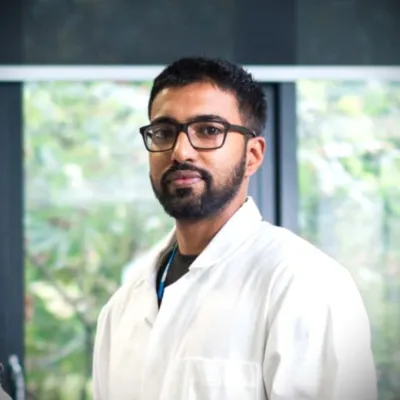
Manu Mulakkal
Senior Scientist, Materials processing and circular solutions
“On my first day at VTT, my then-manager invited me to lunch, which made me feel genuinely welcome. I was also introduced to Finnish coffee culture, which quickly became a comforting part of my routine. Those relaxed coffee sessions were especially helpful in settling in after my move to Finland.”
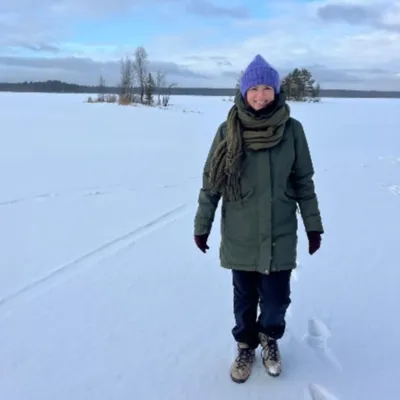
Juliane Kade
Postdoctoral Researcher, Fiber web processes
“From day one, VTT supported me every step of the way and helped me understand cultural differences through onboarding. I had already dipped my toes into Finnish traditions like sauna and ice bathing (avanto), but the VTT Jyväskylä team took it further, introducing me to berry and mushroom picking and inviting me to join sauna boat cruises and cycling tours.”

Toqeer Ehsan
Postdoctoral Researcher, Quantitative science and technology studies
“I spent nearly a decade as a university lecturer and wanted to experience industry. VTT offered the best of both worlds, academic-style research depth with customer-oriented, real-world projects. They supported me throughout the move, from the visa application and travel to temporary housing, registering in Finland and finding a permanent home. The combination of practical support and a warm welcome from my team made settling in smooth.”
Continue reading
Share