
The built environment is facing challenges that traditional construction practices can no longer adequately address. Underground heat storage systems, offshore wind farms and ageing infrastructure are placing new demands on concrete structures, calling for case-specific research and the ability to predict the long-term behaviour of concrete. In demanding conditions, relying on standard design values is no longer sufficient, as safe and sustainable solutions require systematic, research-based planning.
The design of concrete structures still relies heavily on familiar and well-established practices. While these practices remain valid for conventional construction, the industry is now encountering new applications and operating conditions for which long-term experience and data are not yet available.
Underground heat storage requires site-specific concrete mixes
Underground heat storage systems are tanks used to store thermal energy in the form of hot water for later use. They play a critical role in new energy systems, where seasonal heat storage helps balance energy production and consumption. However, they also impose exceptional technical demands on concrete structures.
“In underground heat storage systems, concrete is exposed to extremely high temperatures and repeated temperature fluctuations beyond anything encountered in conventional concrete applications,” says Mika Malkamäki, Solution Sales Lead at VTT.
“These applications require entirely new types of concrete mixes that must withstand both thermal cycling and site-specific conditions such as the effects of soil and groundwater. A solution that works in one location cannot be directly transferred to another, which means the design must be based on research.”
Offshore wind farms expose concrete structures to a combination of stresses
Another emerging application for concrete structures is offshore wind farms. The mechanical, chemical and biological conditions of marine environments place significant stress on concrete structures and accelerate their ageing and degradation. At the same time, structures are subjected to variable and sometimes extreme weather conditions, such as storms and, in northern regions, ice.
In these conditions, safe and durable solutions require research-based materials engineering, where the combined effects of different loads and exposures are assessed on a case-by-case basis.
The transformation of concrete binders challenges established solutions
As the operating conditions of concrete structures become more demanding, the material composition of concrete is also undergoing a transformation. For a long time, industrial side streams such as fly ash from coal combustion and blast furnace slag from the steel industry have been widely used as concrete binders. However, climate targets and industrial change are rapidly reducing the availability of these materials. Fossil-based energy production is being phased out, and the steel industry is transitioning toward low-carbon processes. With these new processes, the composition of blast furnace slag is changing, and its properties as a concrete binder are not yet fully understood.
As a result, new binder solutions are needed, and their performance in demanding conditions must be demonstrated by modelling their long-term behaviour. VTT has already developed and tested such solutions for demanding applications.
“We are testing the suitability of new binder solutions in different concrete mixes, and the research results are very promising. These solutions allow us to both improve the strength of concrete and significantly reduce the amount of cement required, which in turn lowers the carbon footprint of concrete,” says Malkamäki.
Ageing infrastructure requires science-based decision-making
As both the raw materials used in concrete and the conditions in which it is used change, there is a growing need to understand the long-term behaviour of structures and materials. This applies equally to new concrete structures and existing infrastructure that has been in service for decades.
Critical infrastructure is ageing globally, particularly massive hydropower dam structures. A long service life can create a misleading perception of structural durability.
“Design decisions are still too often based on incomplete information, and risk management is surprisingly limited. The fact that infrastructure has functioned reliably for decades does not necessarily reveal its actual condition or remaining safe service life,” Malkamäki points out.
VTT provides science-based analyses of the current condition and remaining safe service life of demanding and ageing concrete structures, with a particular focus on modelling damage mechanisms and material behaviour. Compared to conventional condition surveys, this gives infrastructure owners and decision-makers a more realistic picture of how urgently action is required and how deterioration can be slowed down.
When there are no ready answers, design requires new research
Demanding operating environments and new material solutions are creating situations in construction for which there are no existing standards or long-term user experience. In such cases, safe and sustainable design requires research data tailored to each specific environment.
VTT has decades of experience in researching concrete structures in extremely demanding conditions, including solutions related to nuclear waste disposal. This expertise is now also applied to other demanding concrete structures where operating conditions place new demands on design.
Research may focus, for example, on concrete strength, creep and fatigue, damage mechanisms caused by chemical and physical stresses, corrosion, alkali–silica reaction (ASR) or delayed ettringite formation (DEF).
“We have access to experimental testing and analytical methods that are not readily available elsewhere, along with the capability to design project-specific research setups tailored to the exact operating environment in question. This allows us to respond to entirely new challenges for which no established practices or research methods yet exist,” says Malkamäki.

Research Engineer Hanna Iitti conducting concrete durability testing at high temperature in autoclaves designed specifically for this purpose.
Research is not an off-the-shelf quick fix
Future concrete construction requires science and research to be embedded in the design process from the very beginning.
“We already have all the necessary knowledge and expertise at our disposal. New application areas are now emerging, with requirements that exceed anything we have faced before. This poses a whole new challenge for construction. Research is not a quick fix that can be grabbed off the shelf when the project is almost complete – it needs to be part of the preliminary design phase to ensure that construction remains safe, durable and sustainable in the future,” Malkamäki concludes.
VTT – Experts in demanding concrete structures
We develop research-based solutions for demanding applications, including:
Underground heat storage systems: Assessing concrete behaviour at elevated temperatures and under long-term thermal cycling.
Offshore wind turbine foundations and hydropower dams: Evaluating long-term durability in different marine and freshwater environments and under extreme weather conditions.
Ageing critical infrastructure: Damage analysis and prediction of remaining service life.
Nuclear waste repositories and other highly demanding environments: Modelling the long-term behaviour, degradation mechanisms and tightness of concrete structures over timescales of up to hundreds of thousands of years.
Would you like to discuss your specific project? VTT’s experts help assess operating conditions, identify risks and ensure that research-based knowledge is part of the design process from the earliest stages.
Continue reading
Service:
Sustainable structural materials
White paper:
Through the Valley of Death – How can Finland grow?
Share


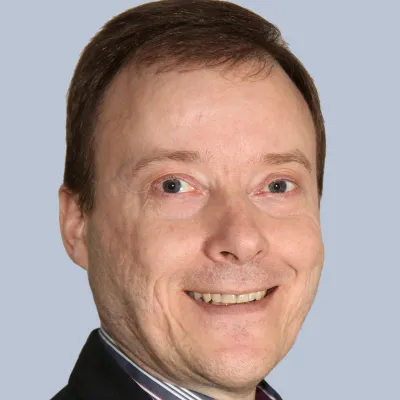
Mika Malkamäki


