
The global forest industry is increasingly turning its attention to Finland, and Jyväskylä in particular. There, VTT has built substantial infrastructure for piloting and pre-commercial production of raw-material-efficient fibre products using water, foam, and airlaying. Whether developing new innovations or improving existing processes, the aim is to increase efficiency. In practice, this means reducing the need for fibre, water and chemicals without compromising performance.
As a result of systematic development work and extensive in-house expertise, a globally unique piloting environment has emerged at VTT’s premises in Jyväskylä. More than EUR 10 million has been invested in equipment over the past 20 years as part of long-term business cooperation, ambitious and renewing research and numerous projects.
”A radical renewal of industry requires taking risks and conducting long-term research. In our pilot infrastructure projects, we collaborate with dozens of companies worldwide. Even as far away as in South America, the forest industry knows what we are capable of here in Central Finland,” says Harri Kiiskinen, Principal Scientist at VTT.
”In large consortium projects, we focus on process development, while product and application development is typically carried out as confidential bilateral projects. This approach allows a large group of companies to participate, even though the participants are often each other's competitors,” Kiiskinen describes.
The piloting equipment in Jyväskylä accelerates the renewal of the forest industry, thereby impacting the industry's competitiveness and shaping the future of production and business. The pilots can be easily modified to meet companies' specific needs. Companies can develop and test new production methods for bio-based materials on a smaller scale than in industrial production, which speeds up the commercialisation of innovations. The piloting environment also addresses the global need to significantly reduce emissions as well as water and energy consumption.
The new VTT AirLaid pilot line is already attracting companies
The latest addition is the VTT AirLaid pilot line, launched in spring 2026. The equipment supplied by the Finnish company Anpap Oy can be used to pilot so-called airlaying in fibre product forming. Traditionally, fibre products have been produced using water-intensive wetlaid forming that mixes about 99 per cent water and 1 per cent fibres in the early stages of the process. In total, producing a thousand-kilogram batch of products consumes 4–15 cubic metres of water.
The airlaid process reduces water use by about 90 per cent, and energy savings during drying reach tens of per cent. The result is, for instance, lightweight fibre rolls suitable for tissue paper and hygiene products. The ambitious goal is also to use airlaid forming in the production of high-volume products, such as packaging boards.
The VTT AirLaid line is close in size to production-scale machines. It has a 700-millimetre-wide web and has a production capacity of 300 kg per hour.
“In airlaid forming, the dry raw material is first mechanically shredded into fibres with a hammer mill. Next, an air stream blows loose fibre onto the wire. Because the fluffy fibre layer needs strength, typically latex or plastic fibres are added as binders. Due to the binder, the products are not yet recyclable, but the market potential is significant, and bio-based binders and recyclable products are being developed,” Kiiskinen says.
VTT and the Finnish family-owned company SharpCell Oy have already collaborated in Jyväskylä on airlaid nonwovens.
“Our goal is to expand the use of the waterless web manufacturing process into new product areas and innovations, such as materials for the packaging, insulation and construction segments. SharpCell has been our partner in developing this technology,” says Kristian Salminen, who oversees the bio-based products segment at VTT.
The airlaid process has been recognised as a technology for decades, but it has been applied within a narrow product area and, so far, with fluff pulp as the only possible raw material. In 2019, VTT began studying the renewal of the method, aiming to expand the raw material base to include kraft pulp and to enable the recyclability and biodegradability of products.
Two EU projects utilising the line are already under way. Additionally, a company developing insulation solutions and another company planning pre-commercial production have already visited Jyväskylä.
The VTT AirLaid pilot line is also part of the broader Energy First research programme. Its theme is the resource-efficient manufacturing of fibre products, and one of its components is waterless production. The programme’s value exceeds EUR 20 million, including EU and ERDF funding and direct assignments from companies.

In April 2026 we had the pleasure of welcoming around 50 customers from Finland and eight other countries to Jyväskylä for the opening of the globally unique VTT AirLaid pilot line.
The piloting in Jyväskylä has spawned several growth companies
“The entire pilot environment in Jyväskylä is intertwined with VTT's role to accelerate growth, renew industry and strengthen sustainability through technology and innovations. Thus, one of our most important ways to make an impact is to create new startups and support growth companies. There are several excellent examples of this,” says Harri Kiiskinen.
One of our most important ways to make an impact is to create new startups and support growth companies. There are several excellent examples of this.
For example, Spinnova Plc, a VTT spin-off founded in 2014 and listed on the stock exchange in 2021, is based in Jyväskylä. The company produces yarn from wood fibre for textile production.
Another VTT spin-off company is Paptic Ltd., founded in 2015, which has developed a recyclable material made from wood fibres that can challenge plastic in many applications.
VTT's basic research on foam forming originally sparked the establishment of the technology company Aisti Corporation Oy in 2019. Aisti uses wood fibre to manufacture plastic-free, fully recyclable acoustic panels and has utilised Jyväskylä's research infrastructure in product development throughout its history. Also founded in 2019, Fiberwood Ltd. was established on the basis of a customer project commissioned to VTT and is now developing carbon-storing and compostable fibreboards. Aisti is currently building a commercial factory and Fiberwood is building a demo production line.
The four companies already employ over 100 people and have a total turnover of about ten million euros.
“Even many large companies may have limited development resources, in which case cooperation with VTT accelerates development work. Thanks to our piloting infrastructure, companies don’t need to invest in expensive equipment themselves. The cost is considerably lower when pilots can be performed, for example, with a hundred kilograms of raw material. Growth companies can quickly try out innovations and bridge the so-called valley of death,” Kiiskinen says.
Thanks to our piloting infrastructure, companies don’t need to invest in expensive equipment themselves.
The initial motivation came from the decline in printing paper consumption
The origins of the pilot environment date back to the 1990s, when VTT started examining ways to boost the production capacity of paper machines together with Finnish forest industry technology suppliers.
“The initial motivation for the piloting infrastructure and renewal work was the decline in printing paper consumption in the 2000s. Together with the industry, we started to explore how Finland could remain competitive in the future,” Kiiskinen says.
The first concrete element of the current piloting environment in Jyväskylä was completed in 2006. Since then, VTT has operated a paper machine there, which is now the second newest of its kind in Finland, although it operates on a pilot scale. In 2012, a foam forming pilot line became operational.
Over the years, the total value of projects co-financed by the European Regional Development Fund (ERDF) alone has nearly reached EUR 25 million. In total, more than 100 companies from around the world have participated in the projects. In addition, pilots worth more than ten million euros have been conducted directly with individual companies in Jyväskylä.
“VTT itself is not always the investor. Clearly, a growing model is that companies bring their equipment here, and we provide the facilities and research expertise,” says Kiiskinen.
The piloting has also generated several innovations, products and services, as well as new jobs. The impact is complemented by three doctoral dissertations, nine master's theses, and nearly a hundred research publications in specialist journals and conferences.
“There is now a positive buzz, as renewable bio-based raw materials are strategically important for Finland, as is recyclability, an area in which the Nordic countries are global leaders. Globally, companies are interested in resource and energy efficiency and using raw materials to manufacture products with very high added value,” Harri Kiiskinen concludes.
Milestones in VTT's Jyväskylä pilot environment
- 2006: VTT SUORA paper machine pilot line started up
- 2012: Foam forming technology introduced for VTT SUORA pilot
- 2015: Increase in dewatering capacity with the SUORA pilot
- 2017: VTT SAMPO foam forming line started up
- 2019: New drying equipment
- 2023: Inclined wire headbox and creping unit for the SUORA pilot
- 2024: Foam application technology for chemical addition
- 2026: New drying technology for VTT SAMPO pilot
- 2026: VTT AirLaid pilot line for air forming
Meet our team
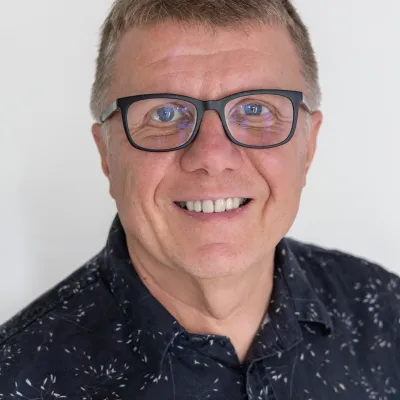
Harri Kiiskinen is Principal Scientist in VTT’s Materials and Energy business area. He specialises in the development of fibre-based materials and their energy-efficient production processes. He holds a Licentiate of Technology degree from Tampere University of Technology and has worked at VTT since his Master’s thesis, also in leading roles. He is especially motivated by leading industry collaboration projects, and he is keen to develop resource-wise materials and processes, such as biobased solutions replacing plastics to improve sustainability. His hobbies include astronomical and atmospheric photography and scuba diving.
Continue reading
Service:
Sustainable bio-based materials
White paper:
Through the Valley of Death – How can Finland grow?
Share


