
VTT’s circularity services for the built environment help cities, real estate owners and developers improve building performance and lifespan, reduce costs and significantly lower negative environmental impacts. We focus on extending the use and value of existing buildings and assets through reuse, building repurposing and smart renovation, while ensuring health-promoting living conditions and resilience. By combining circular thinking across materials, energy and operations, we provide data-driven insights to our stakeholders to enable smarter, fact-based decisions throughout the building lifecycle.
Key facts
Prolong the use of buildings and spaces
Make better decisions on reuse, building repurposing and renovation to retain value and avoid unnecessary demolition, especially of underused or vacant spaces.
Reduce lifecycle costs through systemic optimisation
Identify inefficiencies, balance energy use and improve building performance through monitoring and AI-supported optimisation.
Enable circularity while enhancing quality of life
Ensure health-promoting living conditions when introducing circular materials and solutions.

What do we mean by circularity in the built environment?
Circularity in the built environment is a core principle of the circular economy, shifting the traditional linear model of take–make–use–dispose toward a closed-loop system where materials, components and buildings retain their value for as long as possible. Instead of generating waste, the built environment becomes a bank of resources designed to be reused, repurposed and refurbished over multiple lifecycles. This requires coordination across value chains and supply chains, so that materials, components and spaces can move efficiently between different uses and stakeholders.

Creating a sustainable built environment through circularity
The real estate and construction sector faces growing pressure to reduce CO2 emissions, manage costs and meet new regulatory and reporting requirements. Many decisions related to buildings, materials and energy are still made separately, even though their impacts are tightly interconnected throughout the building lifecycle.
Circularity in the built environment requires a systemic approach. This is essential for sustainable real estate development, operations and management, where long-term value depends on balancing costs, emissions, performance and regulatory requirements.
VTT helps cities, real estate owners, developers and other stakeholders turn multi-domain data into practical insights that help them make better-informed decisions. Our goal is to drive resilience and self-sufficiency while maximising service life and minimising both emissions and costs.
Benefits for building lifecycle performance
Whether you’re planning a new project, renovating an existing building or adding circularity to current building stock, our work supports better outcomes across the full lifecycle. We help you:
Prioritise actions that reduce building lifecycle costs and emissions
Support health-promoting living conditions and user well-being throughout the building lifecycle
Prolong the use of buildings and spaces through reuse, repurposing and smart renovation
Optimise building performance over time through data-supported monitoring and improvement
Meet sustainability reporting and regulatory requirements with credible, science-based evidence.

Why work with VTT
VTT combines deep expertise in the built environment, materials and digital methods with a strong understanding of cities and value chains as interconnected systems. Circularity is rarely about a single discipline – and neither are our services.
Our work is grounded in scientific research, validation and verification. Our large, multidisciplinary teams use digital tools such as AI, BIM and digital twins that behave like the real asset to analyse complex systems and support robust decision-making. Our extensive research infrastructure enables testing, piloting and scale-up together with partners, from concept to real-world application and impact.
Our offering in circular services for the built environment
We offer circularity services for the built environment at building, district and city levels. Our offering covers:
AI-powered monitoring tools to support decision-making and improve building performance over time
Solutions to map and manage your building materials for circularity
Visual real-time dashboards for insights on building performance
Expert guidance and co-development tailored to your sustainability goals
Roadmaps and implementation action plans to support circular value chains.
VTT experts on circularity for the built environment
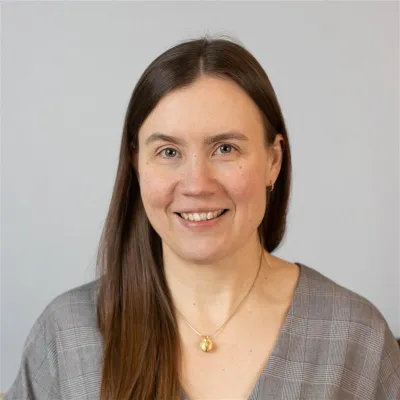
Rita Lavikka works as a Research Team Leader in Data-Driven Circular Construction at VTT. Her research focuses on digitalising and decarbonising the built environment.
Sami Kazi is a Research Team Leader at VTT and an Academic Professor. His expertise spans smart cities, intelligent buildings, built environment innovation ecosystems, climate neutrality and circularity initiatives.
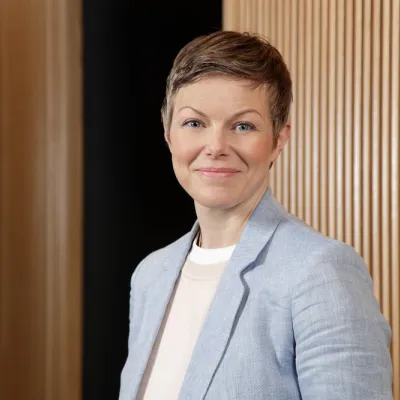
Tuija Pakkanen works as a Lead in Sustainable Built Environment at VTT. She drives research themes and innovations for more sustainable, resilient and future‑ready built environments.
Some questions we can help you with
How can I reduce maintenance costs while maintaining optimal and health-promoting living conditions?
How can I make better decisions without compromising safety and accuracy?
Which materials in my buildings are suitable for reuse or repurposing?
How quickly can I start to see benefits from circular solutions?
Are circular solutions suitable for older buildings?
How can I embed resilience in my buildings?
What is my payback time for renovations?
How to work with us
We are happy to collaborate with you from the initial idea to implementation, or anywhere in between. Following an initial assessment, we can offer a range of options:
-
Get in touch!
Contact us to discuss your needs related to circularity in the built environment. Together, we identify relevant challenges, opportunities and possible next steps.
-
Customised partnership
We work with you through tailored collaborations, combining research, data and expertise to support planning, decision-making and solution development.
-
Cooperative project
We co-develop and pilot solutions together, from concept to validation and scale-up.
-
Our networks at your disposal
Through our extensive networks and research infrastructure, you gain access to ecosystems that support further development, scaling and international collaboration.


